Is AI Driving Up Global Electricity Prices?
A single hyperscale AI data center can consume as much electricity as the annual demand of a city with several hundred thousand residents. In the United States alone, there are over 4,000 such "energy beasts," placing frequent strain on local grids and contributing to soaring power prices. Sam Altman, CEO of OpenAI, has bluntly stated, "The future of AI is constrained by energy and power."

High Power Consumption
Data indicates that global data center electricity consumption in 2023 was more than double the average from 2015-2019. By 2030, this figure could reach 1,500 TWh. Why is AI so power-hungry? The core reasons are the explosive growth of model parameters, rising hardware power demands, and the need for 24/7 operation.
Soaring Global Electricity Prices
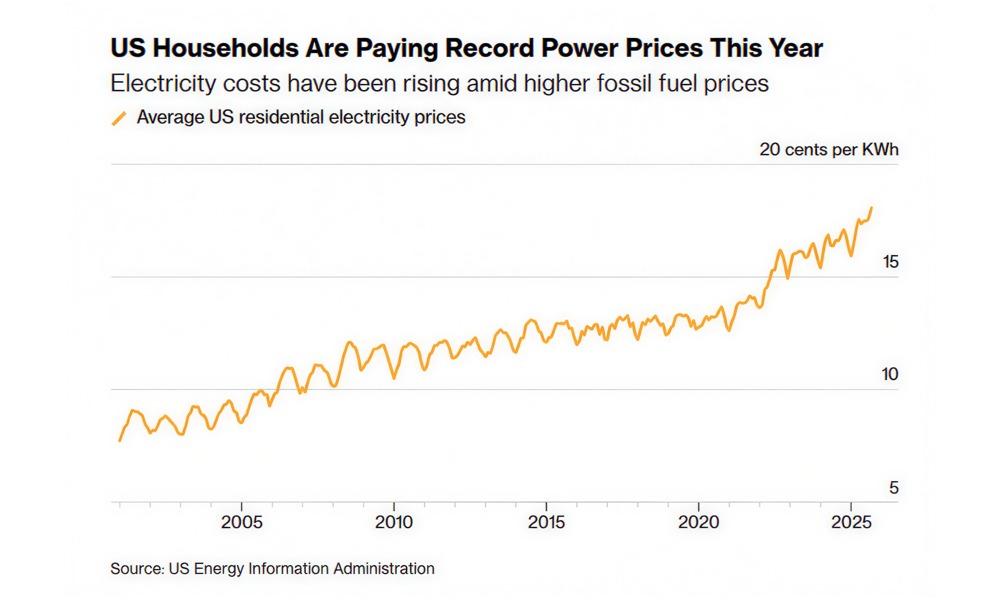
Residential electricity prices in the United States are currently rising at a rate of approximately 7%, while overall inflation stands at merely 2.7%. In other words, electricity costs are escalating significantly faster than general prices. European data centers have seen electricity bills surge by 40% annually, Singapore has suspended approvals for new AI data centers, and South Korean companies are being compelled to relocate training tasks overseas.
Grid Strain and Overload
A critical threat is that AI data centers draw massive, uninterrupted power, creating instantaneous load spikes that can overwhelm local grid capacity, risking blackouts. In Texas, grid connection applications for tens of gigawatts of data center load pour in monthly, yet less than 1 GW has been approved over the past year.
Potential Solutions
Elon Musk suggested at Davos: "Solar is the largest energy source on Earth... A square 100 miles on a side... can power the entire United States."
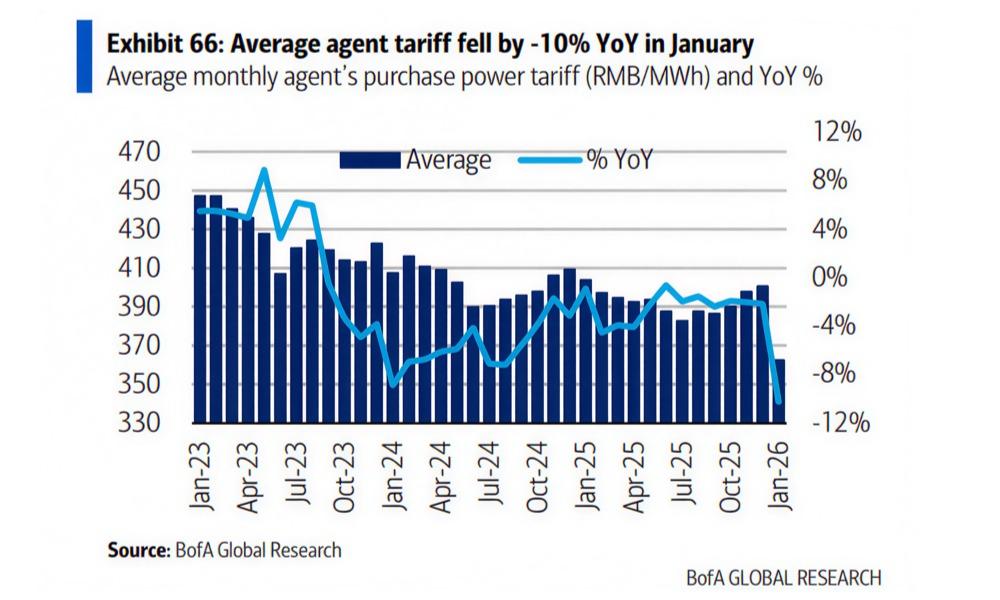
In stark contrast to the US, China's electricity prices have fallen amid its AI compute boom. Data shows China's proxy procurement power price in January 2026 dropped 10% year-on-year, or about 4 fen per kWh. This trend is underpinned by a rapidly expanding power supply, especially from renewables.
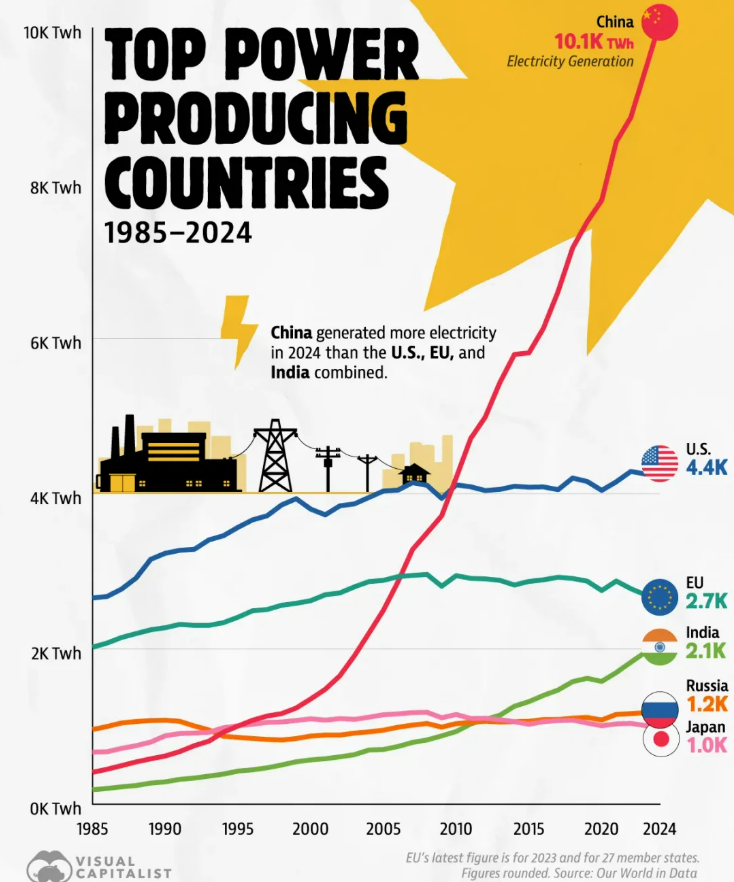
According to China's National Bureau of Statistics, in 2025, installed wind and solar capacity surpassed thermal power for the first time. Clean energy (hydro, nuclear, wind, and solar) generated 3,421.3 TWh, up 8.8% year-on-year, accounting for 35.2% of total large-scale industrial power generation.
Inspired by such models, more data centers are considering building their own power systems, primarily solar, to reduce grid reliance. It's estimated that 20-25% of new data centers in the coming years will have self-generation capability, potentially rising to 30-40% by 2030.